
Aufsteiger
Beiträge: 33
Registriert: Sa 19. Dez 2020, 12:11
 So 27. Dez 2020, 05:21
Sir Frank Gill: Engineer, creator of the BBC's 'Nucleus'.
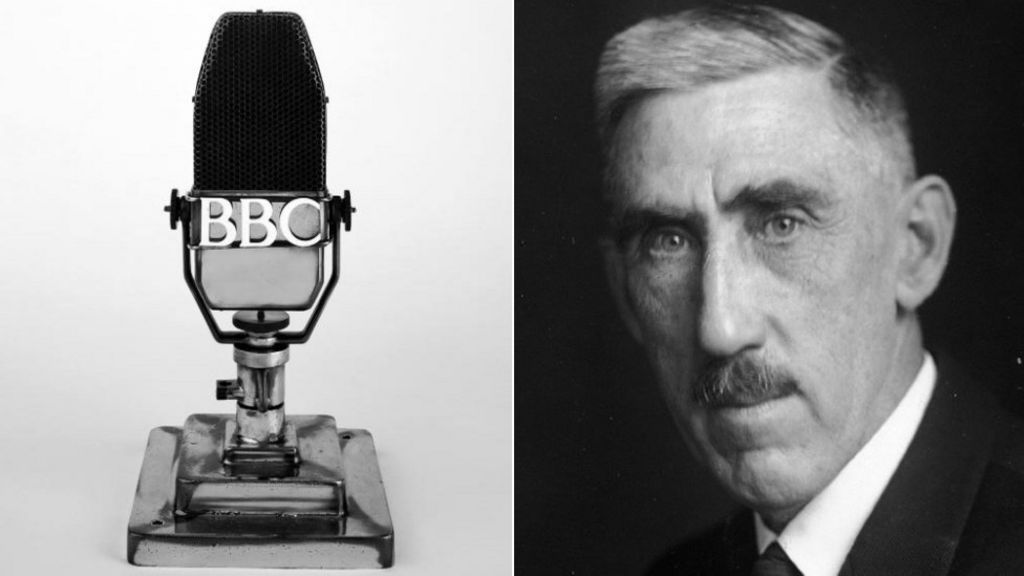
It's been almost a century since the BBC broadcast its first radio program and laid the groundwork to become a national broadcaster. But without the stubbornness and diplomacy of most of the forgotten engineers, the company could have a very different starting point.Unlike his pioneer associates, Alexander Graham Bell, Guglielmo Marconi and John Logie Baird, Sir Frank Gill is not a household name.Born on the Isle of Man and raised on Merseyside after his father's death, he grew up as a respected engineer who played a "fundamental" role in the founding of the BBC in 1922, according to The author of a new book about him.Historian Bob Stimpson said that without Manxman's influence, the broadcaster might not have been a single agency for almost 100 years and could even have other names.Gill was born in Castletown on October 4, 1866.Gill was sent to live in Southport with his uncle at the age of 11 and became interested in the newly invented telephone. Up in 1882, he left Merseyside to join the London National Telephone Company.
His talent allowed him to grow in the company's position - in 1896 he was the slotxo director of the Irish company, and in 1896 he was the director of the Irish company. 1902 He returned to the United Kingdom as chief engineer.He left the company when World War I erupted, and after being appointed an OBE for work at the Department of Defense, he took over as European Chief Engineer at Western Electric Company 'London headquarters in the United States in 1974. Prof.His appointment coincided with an interest in radio.Most of the radio was a hobby in the UK at the time, with amateurs creating their own scenes. But in the United States, media has grown, with more than 550 broadcasting stations across the country.BBC History Head Robert Seatter said the prospect of the same happened in England raised concern.The post office, which maintains a completely new telegram and telephone system and technology, looks to America.They say 'We have to deal with this before such a commotion.
Bob Stimpson referred to the idea at the time: "The producers will produce and sell the radi and that will give them the money to provide the radio.Hence, without a national strategy, a meeting of interested parties is called to try and get manufacturers to work together instead of competing in the way US companies are.He said records show Gill faced the two companies "bumping their heads together and insisting that they buried their differences and headed into one organization through public service means".Gill, chair of the Institution of Electrical Engineers, chaired the first meeting and in one address to the accompanying companies spoke of his strong belief that there should be "First-class broadcasting service without being restricted by patents"Mr Stimpson said it was Gill's diplomatic skills that made him perfect for the role as the two big producers, Marconi and Metropolitan Vickers, had different ideas.Marconi and Metropolitan Vickers are absolutely adamant that they will part," he said.
Frank has been to America [where] they have no regulations and no laws, so companies will start in the backyard and they block other transmitters when they turn on.It's chaos, so the post office and Frank can see that they don't want that chaotic organization to appear in the UK.Gill was president until July 1922, when he handed over to Sir William Noble, and he never gave up the belief that a single organization should handle British radio output.He sees the issues of competing organizations, and he is the one who can drive this discussion towards one unity," Mr Stimpson said.Then Sir William Noble took over and he was able to move forward, and Lord Wright took over the overall direction and he was the one who created the final nucleus Frank created. up"By August 1922, Gill left his job in the United States.
But it was not in time for him to reach a consensus between companies, which agreed with the name he suggested - the British broadcasting company, a nickname that had been kept until 1969. 1927, when it was, it was founded by Royal Charter as the British Broadcasting Corporation.The BBC's first transmission occurred in November 1922.Gill, who took a knighthood in 1941 to serve the telephone industry, continued to work until his death in 1950, helping to establish the first transatlantic radio telephone network in Spain and Japan.But for Liz Bruton, the science museum's technology and engineering curator, "His role in the founding of the BBC" that he should be remembered is best.I think what has been through his life is that he has been very good at bringing people together and persuading them to look at the importance of telecommunication to companies and individuals.