
Aufsteiger
Beiträge: 33
Registriert: Sa 19. Dez 2020, 12:11
 Fr 25. Dez 2020, 05:16
How do EU businesses feel about the trade deal?
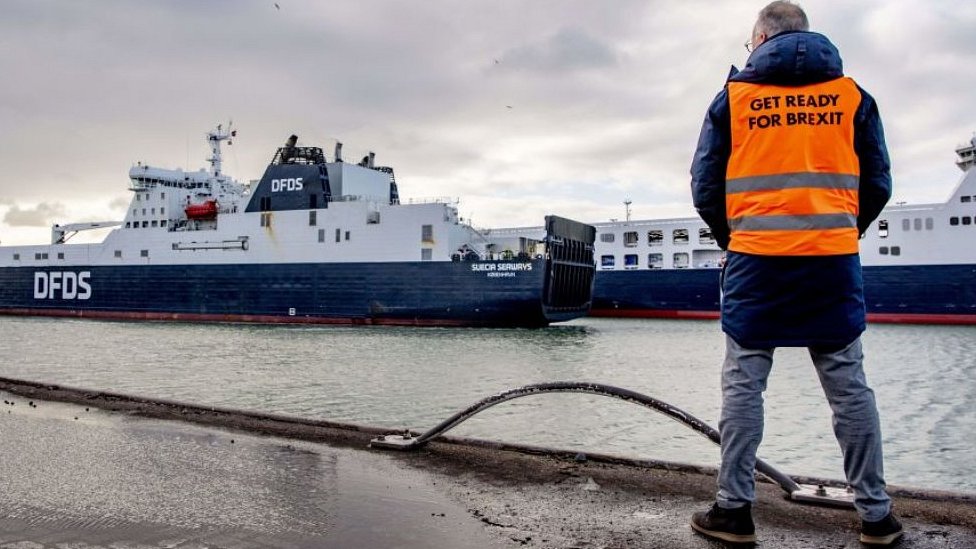
After more than four years of negotiations, the UK has finally had a post-Brexit free trade deal with the EU.Avoid exiting the single market and the EU's customs union on Jan. 1 under World Trade Organization (WTO) rules, which would mean immediate tariffs and quotas.But UK trade with the EU's single market will continue to involve major new obstacles and costs in the form of additional documentation and audits. Europeans exporting to the UK spoke to the BBC about their concerns.Cristina Stribacu, Olive Oil Producer, Kalamata, Greece Of course, Brexit will be very challenging as the UK is the largest retail market we have. We are a boutique business so we have higher costs because of our premium production and we don't want to increase costs for UK consumers.Our family-run farms are export-oriented and our main markets are the UK, Switzerland, the US and Singapore, so our partners are already paying customs duty on our extra virgin olive oil.
We fear our products will be very expensive, perhaps even higher prices will affect the slotxo situation and people will choose not to eat premium olive oil in their diets. However, I would like to be optimistic and optimistic that the appetite for healthy food will not change in the UK and hope everything will go well.The Brexit negotiations worry me a lot because they create an uncertain situation. I am from a young generation who grew up with a European dream and I am afraid that new retailers might be reluctant to buy from this continent because of the new situation.Eline van den Berg, Dutch Flower Growers Cooperative, Royal Flora, Holland We represent 98% or 99% of Dutch farmers and nearly 75% of our export volume from the Netherlands to the UK is cut flowers. What will change from January is that there will be a new situation that will lead to additional costs in the supply chain and extra time.Of course, we have to deal with it - we have no choice. But we expect and expect from the relationship we have built with the UK that the flower trade will continue, although of course it will be much more complicated. We expect the UK to continue to buy its beloved flowers and flowers. But there will be changes
There will be an additional charge for documents for export and import. The UK side's certificate is required in January and will be reviewed on both sides. Other hidden costs may be involved as well.We analyzed the impact on import taxes, processing fees, documentation and phytosanitary (plant health) certificates - but also their financial impact and revenue decline. leaveWe are strong in lilies and chrysanthemums for the UK. As rising costs can affect demand for cut flowers, growers have to find new markets.Yes, farmers are worried; They have many questions Are we ready? We prepare as best we can. In January, the pudding will be proofed and will hopefully become clearer when the review has been performed in practice.Ireland sends about half of the beef to the UK and will likewise apply to me. I sold about 100 cows during the year. As the UK voted to leave [EU], the price was reduced by € 100 [£ 90] per head and we have not received it back since. The decision to leave the UK will be costly - for UK farmers and this could cover all sectors of the economy.My sheep were slaughtered at Kildare Chilling, mostly French markets, sheep were fine: € 0.60 to 0.70 per kg last year. Access to Europe is a huge problem for us and is also a problem for British farmers who ship lamb.
The mine is a mid-sized family farm in Ballinakill, 150 hectares [0.58 square miles] - I did it all myself with little help.Any disruption affects us - we want to see it as close to what we have today in Northern Ireland and at sea. You will not get a better product anywhere in the world. Cheaper here, right on your doorstep. [UK] And it's not easy on the environment - in South America, there's a lot of consideration for animal welfare and labor conditions. Consumers want beef that is produced to our standards.At Tropical Millenium we grow avocados, mangos and papayas, which we market across Europe. We only sell avocados to the UK, which accounts for 8% of the total around 1,500 tonnes from mid-December to April. Most of those avocados are sold at Sainsbury's - we earn € 3 (£ 2.7m) a year from that business.We have started the season and I heard it will be complicated after January 1, but we have someone to take care of exports to the UK, we have prepared the documents. We are ready to use our past service providers to do just that - we have a close relationship with customs agents.We want to maintain our relationship with Sainsbury's because our production is ecological and sustainable, meaning they are not.